Pre-Implantation Genetic Diagnosis (PGD) is a technique used in addition to In Vitro Fertilization (IVF) in couples at risk of passing on chromosome or genetic abnormalities to their offspring, among other causes.
It involves carrying out sophisticated genetic testing on cells that are biopsied from the embryos obtained through IVF to determine whether they carry any chromosome or genetic abnormalities.
PGD gives us information about each embryo’s status, in turn allowing us to select only healthy embryos to be transferred to the female’s uterus.
Current nomenclature
- PGT-A (Pre-Implantation Genetic Testing for Aneuploidies): genetic analysis carried out on the embryo to screen for abnormalities in the number of its chromosomes before it is transferred to the uterus.
- PGT-SR (Pre-Implantation Genetic Testing for Structural Rearrangements): genetic analysis carried out on the embryo to screen for abnormalities in the structure of its chromosomes before it is transferred to the uterus.
- PGT-M (Pre-Implantation Genetic Testing for Monogenic Disorders): genetic analysis carried out on the embryo to screen for a disease affecting a single gene before it is transferred to the uterus.
What does the pre-implantation genetic diagnosis technique involve?
There are several stages involved in the process of PGT-A. Each stage, with the exception of the genetic-molecular testing, is performed at URE Centro Gutenberg. The genetic-molecular testing is carried out at a laboratory that URE Centro Gutenberg works with.
As we mentioned above, we must first carry out a cycle of In Vitro Fertilization treatment in order to obtain embryos.
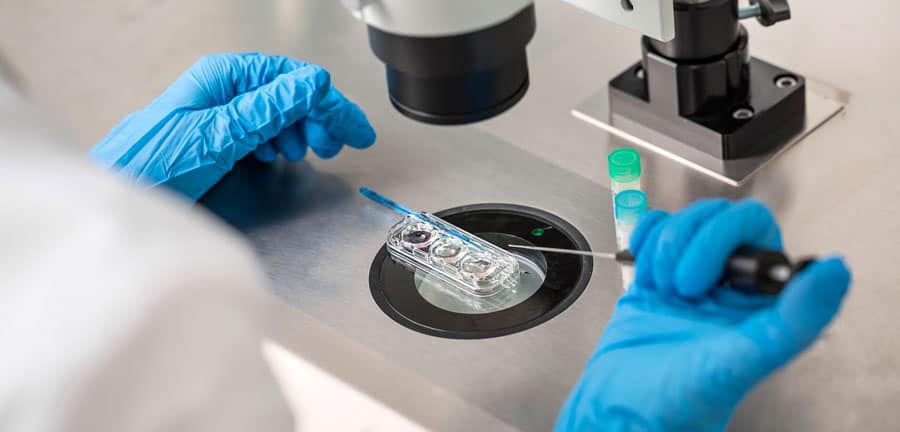
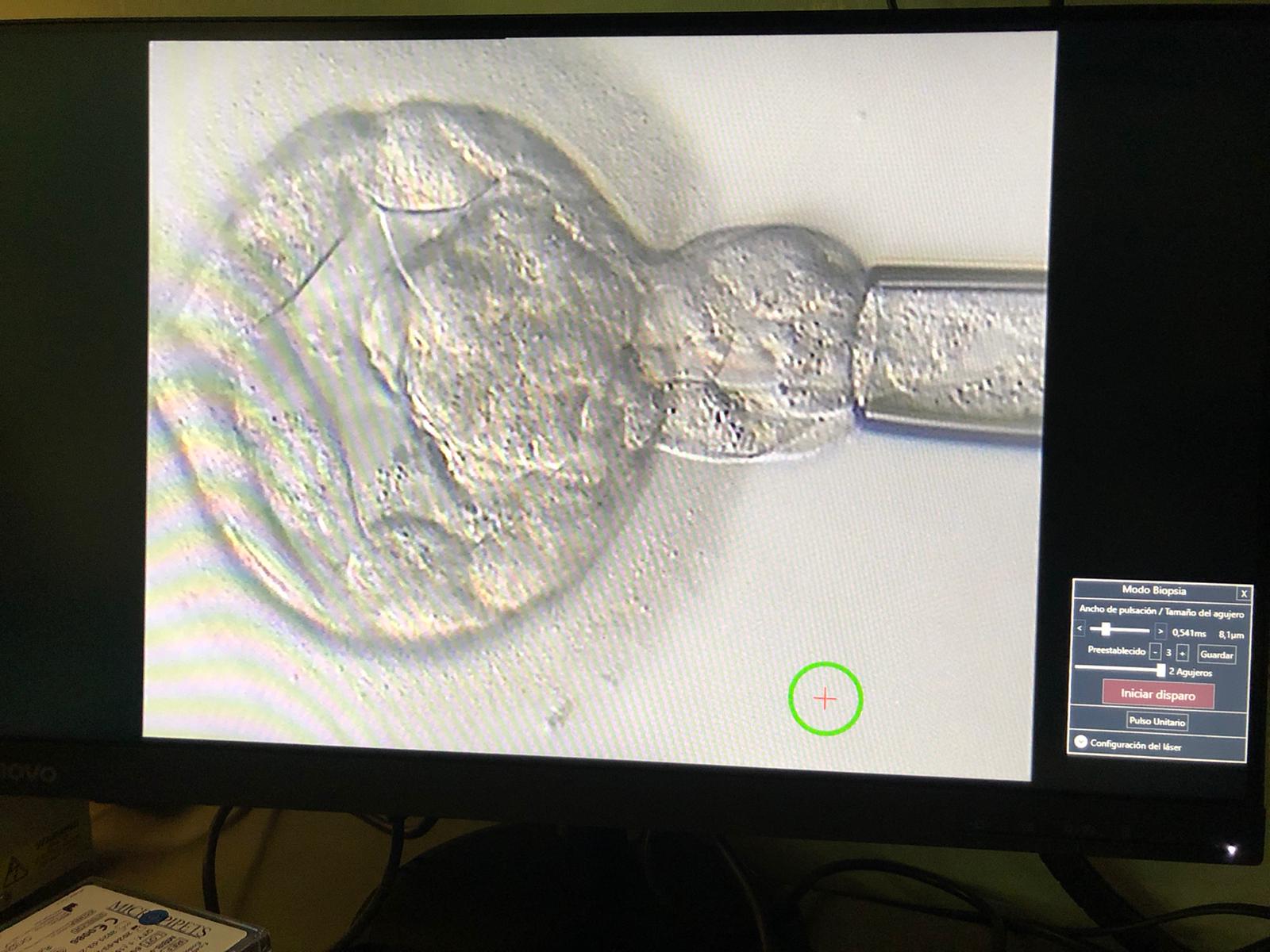
The embryo biopsy is then performed on the embryos, which is the removal of several cells without impacting their development.
Once the biopsy has been taken, the biopsied embryos are cryopreserved and the cells obtained from the biopsy procedure are sent off to a genetic laboratory of reference for processing.
Once we have received the results of the genetic analysis, we can decide which healthy embryo or embryos we are going to transfer depending on chromosomal make-up and characteristics of embryo viability.
When is use of the pre-implantation genetic diagnosis technique indicated?
The most common abnormalities are:
-
- Genetic abnormalities passed on through the male or female gamete (PGT-SR, PGT-M):
- Diseases that only affect one gene, or monogenic illnesses (dominant, recessive or X chromosome‑linked disorders), whose mutations are known and can be analyzed.
- X chromosome‑linked disorders whose gene is unknown or which exhibits certain heterogeneity but can be avoided through gender selection.
- Structural abnormalities, such as reciprocal or Robertsonian translocations.
- Aneuploidy screening (PGT-A):
- Recurrent Miscarriage.
- Implantation Failure.
- Advanced Maternal Age.
- Other:
- HLA typing (histocompatibility).
- Chromosome abnormalities in sperm.
- Genetic abnormalities passed on through the male or female gamete (PGT-SR, PGT-M):
Steps involved in pre-implantation genetic diagnosis
- Preliminary steps. The preliminary steps include carrying out genetic characterization tests for the illnesses to be diagnosed in the parents who are carriers. The purpose is to obtain as much information as possible before performing the PGD technique.
- Creating the embryos. This next step involves obtaining the embryos that will be diagnosed. These embryos must be created «in vitro» using assisted reproduction techniques even if the couple does not have any fertility issues that would make natural conception difficult.
- Embryo biopsy: this step is carried out on day 5 or 6 following fertilization once the pre‑embryo has reached blastocyst stage. It involves extracting several cells from the trophectoderm of the pre‑embryo. Once the biopsy has been completed, the cells obtained are washed to eliminate any potential sources of contamination and are then transferred to small tubes which will be sent by courier to the genetic laboratory of reference, all while maintaining safety, temperature and traceability conditions.
- Genetic diagnostic analysis. The biopsy that was obtained is processed for analysis before undergoing genetic testing at a laboratory of reference.
- Embryo transfer. Depending on the results of the genetic analysis, the medical team and patients make a decision, together, regarding which embryos will be transferred based on their genetic/chromosome make‑up and characteristics of embryo viability.
What is the preparation like for a frozen embryo transfer?
A frozen embryo transfer following pre‑implantation genetic testing is more straightforward as it does not require the same preparation as with a cycle of in vitro fertilization.
This procedure consists in preparing the endometrium to receive the embryo. There are two options: working with the female’s natural cycle, or by carrying out a cycle of hormone therapy which includes the administration of estradiol and then progesterone.
Both methods of endometrial preparation have proven to be equally effective in terms of treatment outcomes. For that reason, at URE Centro Gutenberg the decision to choose one method over the other will depend exclusively on medical criteria, patient comfort and patient well‑being.
In the article ‘’Frozen embryo transfer: frequently asked questions about this assisted reproduction treatment,’’ we explain what the preparation for a cryotransfer involves.
Clinical outcomes
The overall effectiveness of PGD depends on the number of embryos available for testing and their stage of development, performance of the method used to genetically diagnose the cells, and patient age. In addition, when PGD has been indicated due to a monogenic disorder, effectiveness of the diagnostic technique will be influenced by the type of inheritance (recessive versus dominant), which will in turn impact the number of healthy embryos available to the patient at the end of the process. In order to have a reasonable likelihood of success with PGD treatment, the minimum number of embryos needed for testing is 3‑4 blastocysts. This number is based on our experience and results over recent years. Success rates, however, always depend on each individual case and whether the patients have any previous medical history. Although there have been patients whose treatment resulted in only one embryo that could be biopsied, these types of cases logically have lower success rates.
Do you still have questions about this assisted reproduction procedure? Request an appointment with us! The first consultation is absolutely free, and your doctor will thoroughly study your case in order to offer you the best treatment and the highest chances of success.