
Discover our pregnancy success rate
What does the pregnancy success rate mean?
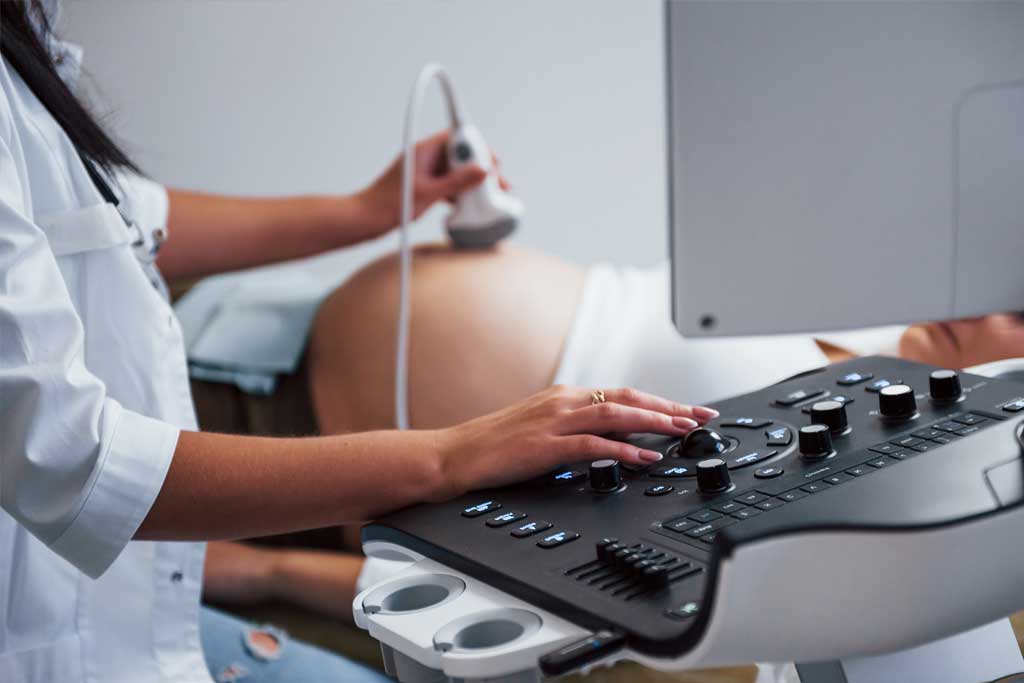
In our clinic, the pregnancy rate we publish is confirmed through a first ultrasound scan, where we verify the presence of a gestational sac.
Our commitment is to offer clear and transparent information so that our patients can accurately understand their chances of pregnancy. We believe that having this data in a rigorous manner provides reassurance and confidence in our medical team.
For this reason, we go one step further: we do not limit ourselves to considering a positive biochemical test, but our pregnancy success rate is based on the ultrasound confirmation of the pregnancy.

Our cumulative clinical pregnancy rate
The cumulative clinical pregnancy rate is one of the most accurate indicators for measuring the pregnancy success rate after an assisted reproduction treatment. This value reflects the overall success of the treatment, as it includes both the fresh embryo transfer and the frozen embryo transfers performed within the same cycle.
By considering all possible transfers, the cumulative clinical pregnancy rate provides a more realistic and complete view of the chances of achieving a pregnancy. In our clinic, we only count pregnancies confirmed by ultrasound, thus ensuring transparent results and 100% reliable data.
Real results of In Vitro Fertilization (IVF) with own oocytes
- Under 35 74.7%
- 58.1%
- Between 35–39 52.9%
- 44.6%
- 40 or older 20.9%
- 19.5%
Cumulative clinical pregnancy rate (only 1 cryotransfer)
Clinical pregnancy rate with a single fresh transfer
In IVF treatments with own eggs, we freeze embryos in 58.95% of cases. This high percentage increases the chance of pregnancy, as it allows patients to have additional attempts with their frozen embryos without needing to start a new treatment.
%
Percentage of cases in which we freeze embryos
Real results of In Vitro Fertilization (IVF) with donated oocytes – Egg Donation
All our results are above the national average obtained by assisted reproduction centers in Spain, according to data from the Spanish Fertility Society (SEF) – Registry.
- 71.4%
- 54%
Cumulative clinical pregnancy rate (only 1 cryotransfer)
Clinical pregnancy rate with a single fresh transfer
In addition, in egg donation we freeze embryos in 81.3% of cases. This is a high percentage that allows patients to increase their chance of pregnancy through new attempts with their frozen embryos, without needing to start a new treatment.
%
Percentage of cases in which we freeze embryos
PGT in cases of recurrent miscarriage and advanced age
All cases of IVF with Preimplantation Genetic Testing (PGT) performed in our clinic are carried out using laser embryo biopsy at the blastocyst stage (day +5 or +6). This procedure is especially useful in cases of recurrent miscarriage. The embryos are always frozen, and transfers with PGT are performed with cryopreserved embryos, improving the chances for patients with recurrent miscarriage.
- 66%
- 54.5%
Clinical pregnancy rate in IVF treatments with PGT in the first embryo cryotransfer
Cumulative clinical pregnancy rate in IVF treatments in the second embryo cryotransfer
Success rates in IUI/DI treatments
Artificial insemination, whether using partner sperm (IUI) or donor sperm (DI), is considered one of the simplest procedures in the field of assisted reproduction. Its main advantage lies in being a minimally invasive, affordable and very comfortable method for the patient. For this reason, it is usually the first option suggested for young women or couples with a good egg reserve, since the success of artificial insemination largely depends on age and individual health conditions.
However, the success rates of artificial insemination are more limited compared to other techniques, such as in vitro fertilization. Thus, although artificial insemination can be a very suitable option in certain cases, it is not always the definitive solution.
The published results represent the average for the last three years.
- IUI: Intra-marital Artificial Insemination 24%
- 20%
- DI: Donor Insemination 25%
- 26%
Between 35–39 years

Safety and innovation for your fertility treatment
Average age of our patients and complex cases.
Age plays a key role in the journey to conception, and in recent years, the average age of women who wish to become mothers has risen significantly. In our clinic, we have supported many women who begin their path to motherhood from the age of 40, a segment that is increasingly significant in our treatments.
We are specialists in complex cases and in fertility treatments for women aged 40 or older, offering personalized solutions based on the latest reproductive technology.
Percentage of women aged 40 or older in our treatments
75%
75% of the patients who have undergone an egg donation cycle in our clinic are 40 years old or older.
47,9%
47.9% of the patients who have undergone an IVF cycle with their own eggs and PGT are 40 years old or older.
27,7%
27.7% of the patients who have undergone an IVF cycle with their own eggs are 40 years old or older.
Single embryo transfer: greater safety, reduced multiple pregnancies.
In our clinic, we are committed to innovation and quality in each of our treatments. Thanks to cutting-edge technologies in our IVF Laboratory, we ensure safe and effective procedures, improving the success rate and minimizing risks.
The use of our Time-Lapse incubator with Artificial Intelligence (AI) allows us to select the embryo with the highest implantation potential, which enables us to perform single-embryo transfers in most cases. This has led to a significant reduction in multiple pregnancies and their possible complications.
With this approach, we offer our patients the highest chances of success with the greatest possible safety.
100%
100% of our embryo transfers are performed at the blastocyst stage (day +5 or +6 of embryo culture).
94%
In egg donation treatments, we perform single embryo transfer in 94% of cases, with a multiple pregnancy rate reduced to 0%.
85%
In IVF treatments with own eggs, we perform single embryo transfer in 85.06% of cases, with a multiple pregnancy rate of 4.76%.

More information
Complete the form or call us at (+34) 952 122 565.