
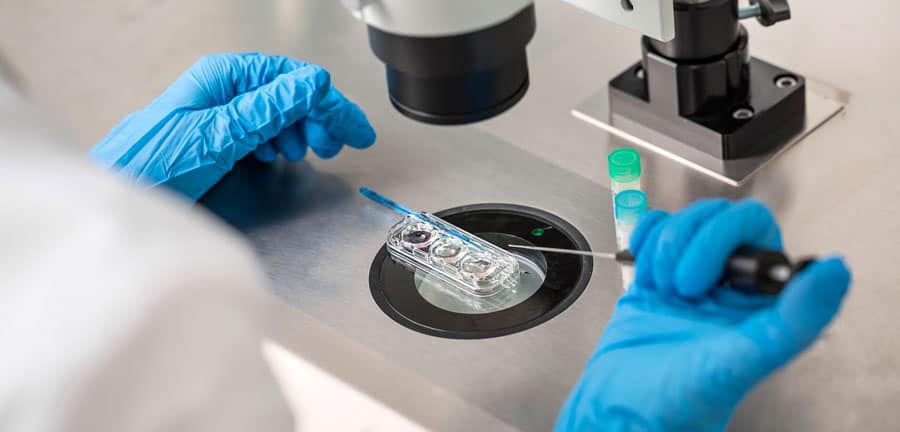
The frozen embryo transfer is a fundamental treatment in assisted reproduction and is a common part of many in vitro fertilisation (IVF) processes, both with the patient’s own oocytes and with egg donation. Thanks to the vitrification technique (ultra-rapid freezing that preserves embryos in optimal conditions), we can now perform safe, effective embryo transfers that are adapted to each woman’s rhythm. When we perform IVF treatment, we aim to obtain the right number of oocytes to generate good quality embryos. Sometimes more than one optimal embryo is obtained for transfer, and that is when we resort to cryopreservation. In addition, frozen embryo transfer is especially useful when we advise postponing fresh transfer for medical reasons: risk of ovarian hyperstimulation, endometrial abnormalities, hormonal problems, or other circumstances that make it advisable to defer transfer. Even so, many patients ask us questions about how the endometrium is prepared, what differences there are between a natural cycle and a substituted cycle, and which is the safest option for their pregnancy. In this article, we explain clearly what each method consists of and why, according to current evidence, in many cases the natural cycle can offer significant advantages both for the woman and for the development of the pregnancy.
How is the endometrium prepared for a frozen embryo transfer?
For the transfer to be successful, we need a suitable endometrium that is synchronised with the embryo to be transferred. This can be achieved in two ways:
-
- Natural cycle. The woman’s own body prepares the endometrium during a normal ovulatory cycle, without the need for medication to generate endometrial development.
-
- Medicated cycle or Hormone Replacement Therapy (HRT). When it is not possible or advisable to follow a natural cycle, estradiol and progesterone are administered sequentially to achieve the same effect.
Which is better, frozen embryo transfer in a natural cycle or in a substituted cycle?
From the point of view of pregnancy and gestation rates, both methods have proven to be equally effective. However, current scientific evidence provides an important nuance that influences the choice of method. Fewer obstetric complications in the natural cycle. We now know that frozen embryo transfers in the natural cycle are associated with a lower risk of complications during pregnancy, such as:
- Gestational hypertension
- Pre-eclampsia
- Premature birth
- Fetal growth abnormalities
For this reason, when a woman has adequate ovulation and it is possible to follow a natural cycle, this option is not only safe, but can also provide greater well-being and better results in terms of pregnancy progression.
A more comfortable option for women
Furthermore, the natural cycle has obvious advantages:
- Less medication
- Fewer controls
- Fewer interventions
- Greater sense of normality during the process
For all these reasons, at URE Centro Gutenberg, most frozen embryo transfers are performed in a natural cycle, provided that the patient’s clinical condition allows it. Our goal is to combine the best scientific evidence with maximum comfort and safety for every woman and every family who accompanies us on their journey. If you would like to find out more about this procedure, you can read our specific article with frequently asked questions about frozen embryo transfer, where we provide clear answers to all the questions our patients usually ask us before starting this treatment. At URE Centro Gutenberg, we offer personalised advice to help you decide which type of endometrial preparation is most suitable for you. Our medical team will study your cycle, your history and your needs to offer you the safest, most effective and most comfortable option for you. If you are considering an embryo transfer or would like a second opinion, we are here to help. You can request your first free consultation (in person or online) and resolve all your queries with our specialists. Contact us and start your journey to pregnancy today.